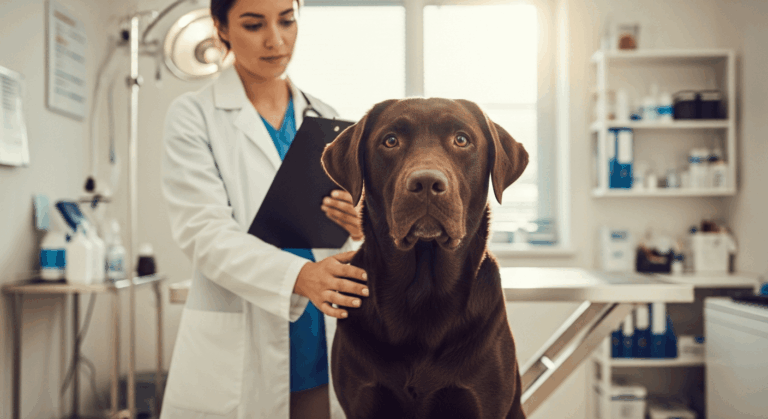

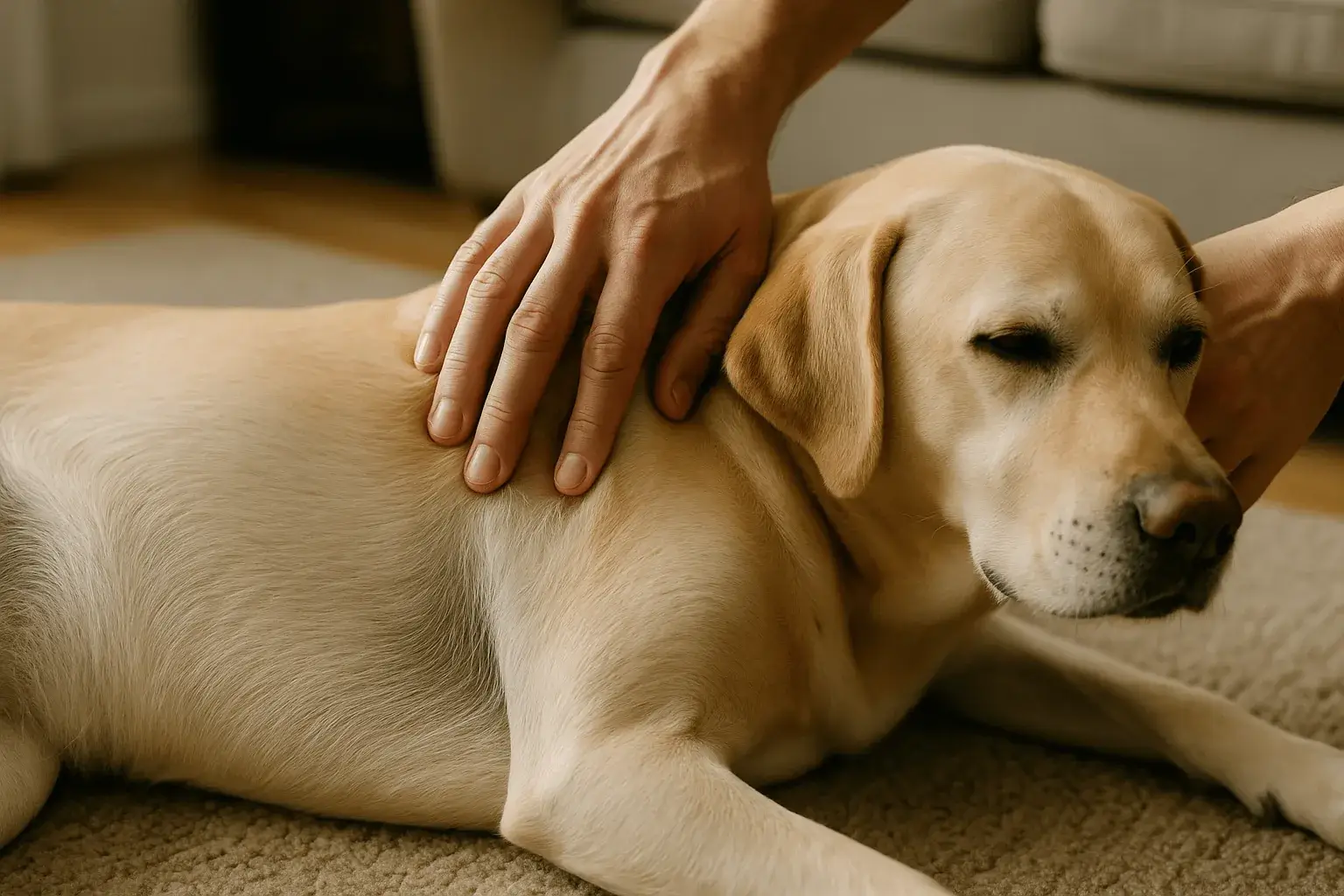
Labrador skin problems are one of the most common reasons owners book a vet appointment — and the breed is genuinely more susceptible than most. Their dense double coat traps moisture, their love of water creates ideal conditions for bacterial and yeast infections, and Labs have a documented genetic predisposition to environmental allergies. If your Lab is scratching, chewing its paws, or developing patches of irritated skin, the cause is almost always identifiable. This guide covers the four most common conditions, how to tell them apart, and what actually works.
The most reliable early differentiator is timing. Seasonal scratching — worse in spring and summer, calmer in winter — points toward environmental allergy. Year-round scratching at the same intensity, regardless of season, points toward food allergy or chronic infection. A vet skin assessment is the correct next step either way.
Common Labrador Skin Problems: What You’re Likely Dealing With
Most owners are told their Lab “might have allergies” without being told that several distinct conditions look similar from the outside but have completely different causes and treatments. These are the four most common:
Atopic dermatitis is the most common skin condition in Labradors. It is an environmental allergy — the immune system overreacts to airborne or contact triggers such as grass pollen, tree pollen, dust mites, and mould spores. Symptoms typically appear seasonally at first, often from 1–3 years of age, and may become year-round as sensitivity builds over time. The classic presentation is paw chewing, belly scratching, face rubbing, and recurrent ear infections.
Food allergy produces symptoms year-round regardless of season. Unlike environmental allergy, it may also include gastrointestinal signs — loose stools, gas, or vomiting — alongside skin symptoms. The most common food allergens in Labs are chicken, beef, wheat, and dairy. Food allergy is less common than environmental allergy but is frequently the first thing owners suspect, which leads to months of trial-and-error on the wrong treatment path.
Yeast dermatitis (Malassezia) is a secondary skin infection that frequently develops on top of an allergic skin condition. It has a distinctive musty or bread-like smell, produces dark brown staining on the fur between the toes, and causes a greasy or waxy skin texture. The ears and paws are the most commonly affected areas. It will not resolve without antifungal treatment — managing the underlying allergy alone is not enough once yeast has taken hold.
Bacterial pyoderma appears as red bumps, crusting, circular lesions, or patches of hair loss. Like yeast infections, it usually develops secondary to another skin problem — the skin barrier is compromised by allergy or irritation, and bacteria colonize the damaged tissue. It requires antibiotic treatment to resolve.
Hot spots (acute moist dermatitis) appear suddenly as raw, weeping, fast-expanding skin patches. Labs are particularly susceptible due to moisture retention in their thick coat after swimming, and the hind end, neck, and base of tail are the most common locations.
Diagnosing Labrador Skin Problems: Food vs Environmental Allergy
This is the most commonly confused distinction in Lab skin health — and getting it wrong wastes months of effort on the wrong treatment.
Timing is the most reliable differentiator. Environmental allergy follows seasons — worse when pollen counts rise, noticeably calmer in winter. If your Lab scratches heavily from March through September and is much improved in January, that is an environmental pattern. Food allergy has no seasonal pattern. The dog is equally symptomatic in January and July because the trigger — the food — does not change with the calendar.
Location provides secondary clues. Environmental allergy typically presents on contact areas: paws from walking on grass, belly from contact with the ground, and face from airborne exposure. Food allergy may affect similar areas but is more likely to also produce GI signs alongside the skin symptoms.
Confirming food allergy correctly requires an 8–12 week elimination diet trial under veterinary supervision. This means feeding a hydrolysed protein food — proteins broken down small enough that the immune system cannot recognize them — or a novel protein food using an ingredient the dog has never eaten before. Switching from one chicken kibble to another chicken kibble is not an elimination diet. The allergen must be entirely absent for the full trial period.
Blood allergy tests and hair analysis marketed for food allergy are not validated in veterinary medicine. Multiple studies have found them unreliable for diagnosing food allergy in dogs. An elimination diet trial is the only method that gives a definitive answer.
One important caution: grain-free diets are widely marketed for dogs with skin problems but have no evidence base for allergy management, and the FDA has been investigating their association with dilated cardiomyopathy (DCM) since 2018. Do not switch to grain-free without direct vet guidance.
Dry Skin in Labradors: Causes & Treatment
Dry, flaky skin is a distinct presentation from the allergy-itch cycle and has different causes. If your Lab has white flakes visible on a dark coat, a dull coat texture, and only mild or no itching — dry skin is more likely than allergy.
The most common causes in Labs are over-bathing (more than once a month strips the natural oils that protect the skin barrier), a diet low in omega-3 fatty acids, dry indoor air from central heating in winter, and — less commonly — hypothyroidism. An underactive thyroid often presents alongside weight gain, lethargy, and cold intolerance. If your Lab has all four signs, a thyroid panel is worth requesting.
Fish oil supplementation is the most direct dietary fix. According to VCA Animal Hospitals, approximately 1,000–2,000 mg of combined EPA and DHA daily is appropriate for a 30 kg Lab. Look for products specifying EPA and DHA content rather than just “fish oil.”
Bathing frequency is the simplest fix if over-bathing is the cause. Labs with healthy skin need bathing once a month at most. Use a moisturizing oatmeal-based shampoo — these support the skin barrier without stripping oils. Avoid shampoos containing sulfates or synthetic fragrances.
Getting Relief While You Investigate the Cause
Your Lab needs comfort before the diagnostic process is complete. These are the safe immediate options:
A cool-water rinse of the affected area reduces surface inflammation and removes contact allergens from the skin. It takes two minutes and provides temporary comfort.
A colloidal oatmeal bath is genuinely soothing and safe to repeat as often as needed. It reduces irritation and supports the skin barrier without introducing new allergens.
An Elizabethan collar or inflatable collar prevents your Lab from reaching the affected area and creating an open wound from scratching. Self-trauma is the fastest way for an itchy patch to escalate into an infected hot spot.
For vet-assisted relief, cetirizine (generic Zyrtec) has better evidence than diphenhydramine (Benadryl) in dogs — confirm dosing with your vet before administering. For moderate to severe environmental allergy, Apoquel (oclacitinib) is the most effective prescription option currently available. It requires a vet visit, but for Labs with genuine atopic dermatitis it produces rapid, meaningful relief.
While managing symptoms, keep a daily log: date, severity on a 1–10 scale, affected body areas, and any recent environment or food changes. This record is invaluable at the vet appointment — it turns a vague “he’s been itchy” into a pattern a vet can actually work with.
Do not apply human topical steroid creams (hydrocortisone) to your Lab’s skin — absorption through dog skin can cause hormonal disruption with repeated use.
Hot Spots: Treatment & When They Signal Something More
A hot spot (acute moist dermatitis) is a raw, weeping, rapidly expanding wound caused by the dog’s own scratching or licking. Bacteria proliferate in the moist, broken skin, and a hot spot can double in size within 24 hours. Labs are particularly prone in summer and after swimming.
Same-day response:
- Clip the hair around the affected area. This reveals the full extent of the wound and allows the surface to dry. Leaving matted hair in place keeps the wound moist and worsens it.
- Clean gently with dilute chlorhexidine solution or saline. Do not scrub. Pat dry.
- Apply an E-collar immediately. Self-trauma is what makes hot spots escalate — without the collar, the dog will continue licking and the wound will not heal.
Most mild hot spots resolve within 7–10 days with proper cleaning, drying, and prevented self-trauma. A veterinary-grade chlorhexidine and antifungal spray speeds healing. Larger wounds, wounds with thick discharge, or hot spots showing no improvement within 3 days need veterinary antibiotics.
Recurrent hot spots in the same location are not a skin problem — they are a symptom of an underlying issue, most commonly untreated allergy. Treating each episode individually without addressing the root cause will not produce a lasting result.
Treating Labrador Skin Problems: What the Evidence Supports
Many owners cycle through shampoos and sprays for months with no improvement. Here is what the evidence actually supports:
Strong evidence: Chlorhexidine-based shampoos are effective against bacterial skin infections and are the standard of care for superficial pyoderma. Ketoconazole-based shampoos treat yeast dermatitis. Colloidal oatmeal shampoos are genuinely soothing for sensitive and mildly irritated skin — not medicinal, but safe and useful for maintenance. Fish oil supplementation has a solid evidence base for improving coat quality and skin barrier function over time. Apoquel and Cytopoint, available on prescription only, are the most effective treatments currently available for environmental atopic dermatitis.
Weak or no evidence: Apple cider vinegar applied to inflamed or broken skin causes irritation — it is acidic and should not be used as a topical treatment on open wounds. Coconut oil applied topically has no reliable evidence base in dogs for skin conditions. Most “all-natural” allergy sprays sold online have no peer-reviewed evidence behind them. Blood tests and hair tests marketed for food allergy in dogs are not validated — do not use these in place of an elimination diet trial.
For ear-specific skin infections that frequently accompany skin allergy in Labs, see labrador ear infections.
Frequently Asked Questions: Labrador Skin Problems
Why does my Labrador keep scratching?
The most common causes of labrador skin problems involving itch are environmental allergies (grass, pollen, dust mites), food allergies, or a secondary yeast or bacterial infection. Seasonal scratching — worse in spring and summer — points toward environmental allergy. Year-round, consistent scratching at the same intensity points toward food allergy or chronic infection. A vet skin assessment is the correct next step.
What are the most common labrador skin problems?
The four most common are atopic dermatitis (environmental allergy — paw chewing, belly itching, face rubbing), food allergy (year-round itching, sometimes with GI signs), yeast dermatitis (musty smell, brown paw staining, greasy skin), and hot spots (raw, fast-spreading weeping wounds, common after swimming). These conditions often overlap — a Lab with untreated allergies frequently develops secondary yeast or bacterial infection on top.
How do I know if my Labrador has a food allergy?
Food allergy produces consistent skin symptoms throughout the year regardless of season. It may also include GI signs — loose stools or gas — alongside the skin symptoms. The only reliable way to confirm a food allergy is an 8–12 week elimination diet trial under veterinary supervision, using a hydrolysed protein or novel protein food. Blood tests and hair analysis for food allergy are not validated in veterinary medicine.
What can I give my Labrador for itchy skin?
For immediate relief: a cool-water rinse, a colloidal oatmeal bath, and an E-collar to prevent self-trauma. Cetirizine (generic Zyrtec) has better evidence than diphenhydramine (Benadryl) in dogs — confirm the dose with your vet before using. For environmental allergy not responding to these measures, Apoquel is the most effective prescription option currently available. Fish oil supplementation (1,000–2,000 mg EPA/DHA daily for a 30 kg Lab) supports skin barrier function over time.
How do I treat a hot spot on my Labrador?
Clip the hair around the wound to reveal its full extent, clean gently with dilute chlorhexidine or saline, and apply an E-collar immediately to stop self-trauma. Most mild hot spots resolve in 7–10 days. Hot spots showing no improvement within 3 days, or large wounds with thick discharge, need veterinary antibiotics.
Find the Cause First
Most labrador skin problems are manageable — but identifying the correct cause is what determines whether treatment actually works. If symptoms are seasonal, environmental allergy is most likely and a vet discussion about Apoquel or a full allergy workup is the right next step. If symptoms are year-round and consistent, an elimination diet trial under vet supervision should be the priority. For ongoing health context, see the Labrador health guide.