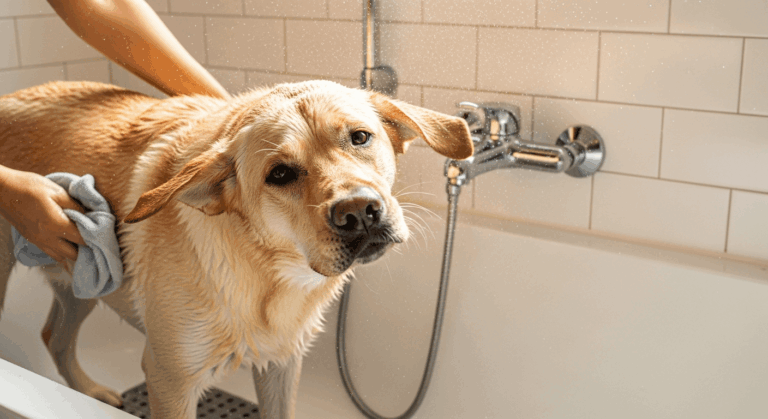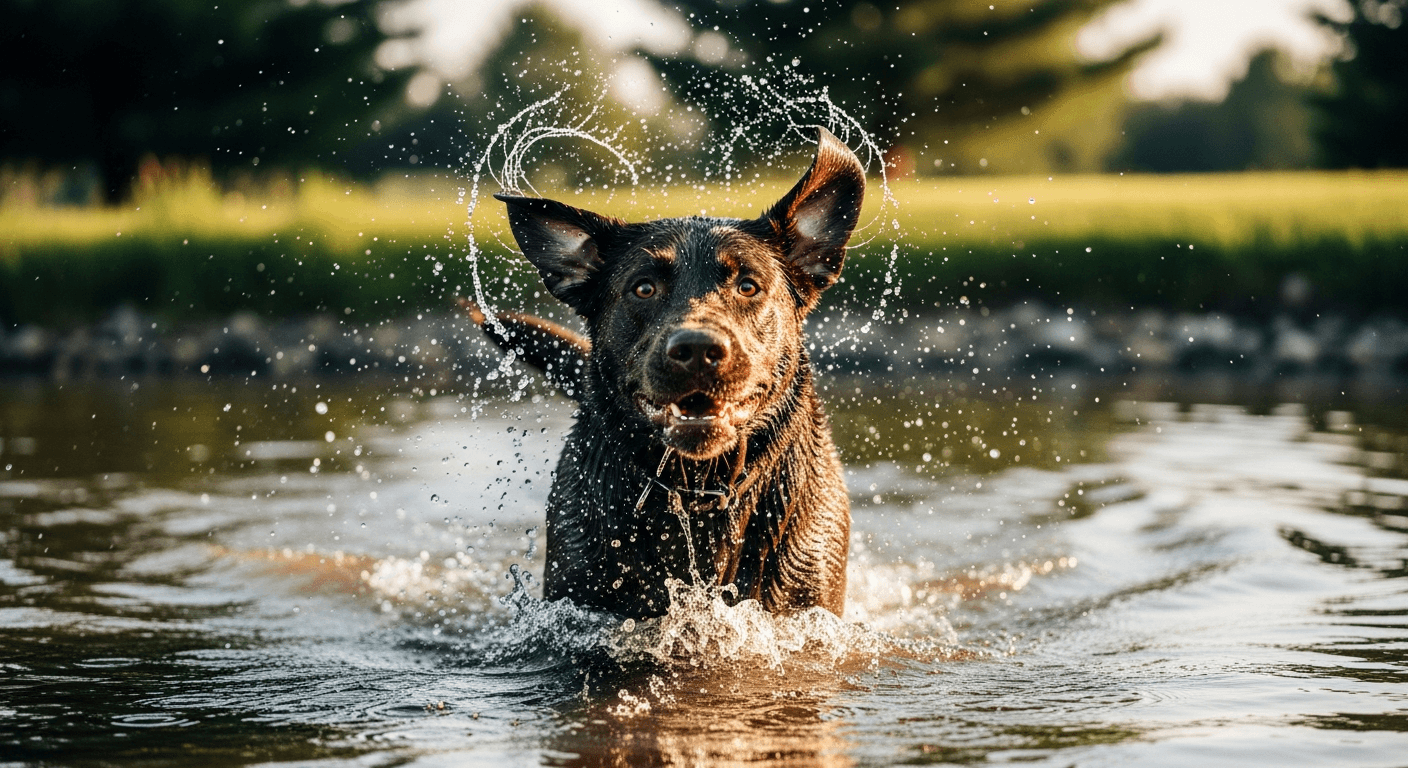
Most Labradors like water. The breed was developed in Newfoundland to retrieve fish and waterfowl from cold Atlantic waters, and that history is still built into their bodies — webbed feet, a water-resistant double coat, and a thick rudder-like tail make Labs natural swimmers.
That said, not every Lab is born ready to dive in. Here’s the breed science behind the instinct, why some Labs are hesitant, and how to introduce water the right way.
Why Labs Were Built for Water
The Labrador Retriever descends from the St. John’s Water Dog — a working dog used by fishermen in Newfoundland in the 18th and 19th centuries. These dogs retrieved fishing lines, hauled nets, and fetched birds from the frigid North Atlantic.
British hunters brought the breed to England in the early 1800s, where it was refined into the gundog we recognize today. The AKC formally recognized the Labrador Retriever in 1917.
That working heritage shaped every physical feature Labs still carry. The affinity for water is not a personality quirk. It is the direct result of selective breeding for aquatic work over hundreds of years.
Three Physical Traits That Make Labs Natural Swimmers
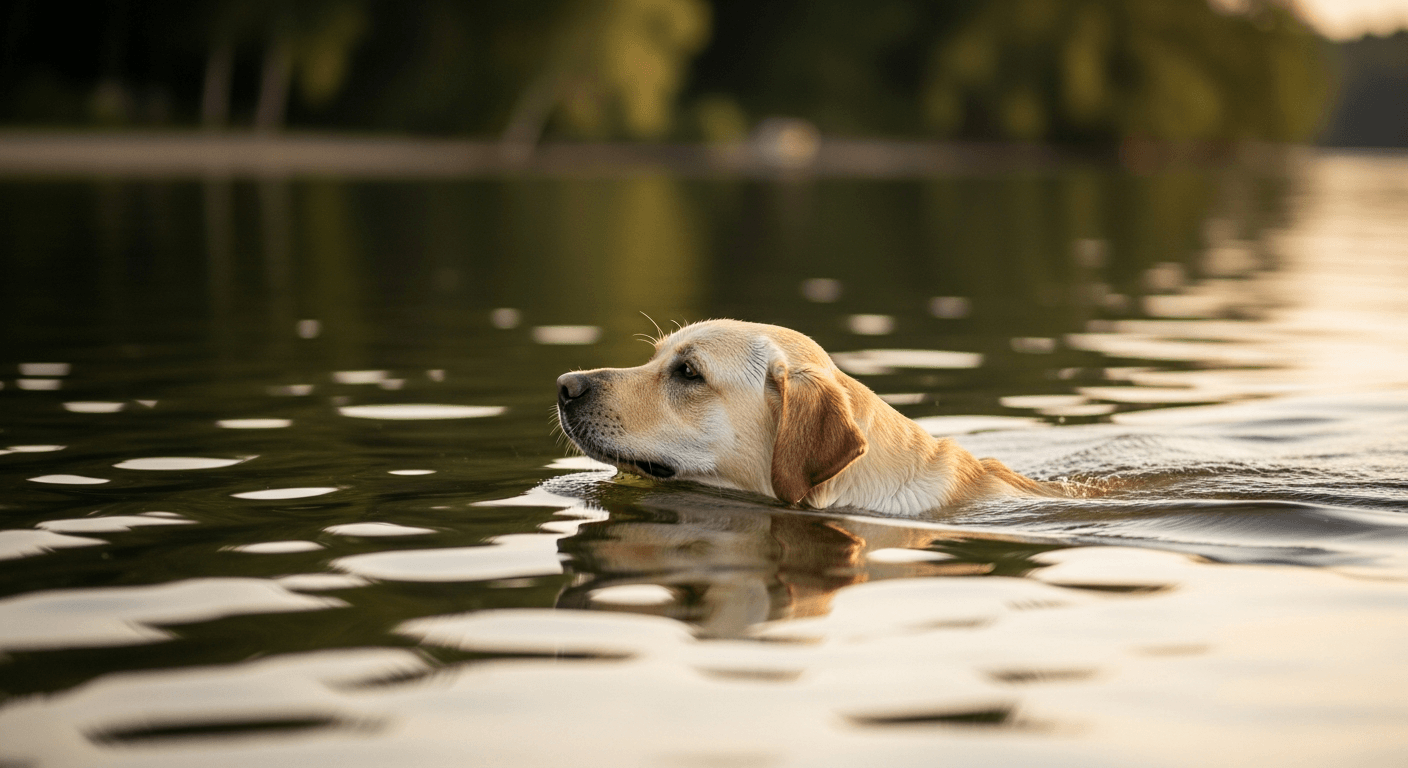
Webbed feet. Labs have visible webbing between their toes — more pronounced than most breeds. It functions like a paddle, pushing more water per stroke and making the swim efficient with less effort.
The otter tail. A Lab’s tail is thick at the base, tapers toward the tip, and is covered in dense fur. It works as a rudder, helping Labs steer and maintain direction in moving water. It is one of the breed’s most distinctive physical traits, and you can see it working when a Lab changes direction mid-swim.
A water-resistant double coat. Labs have two coat layers: a soft, dense undercoat that insulates against cold water, and a harder outer coat that repels moisture. Water rolls off the outer coat quickly. The undercoat keeps the skin warm even in cold conditions — the same reason Labs are heavy year-round shedders. Learn more about Labrador shedding →
The AKC lists the Labrador Retriever alongside the Chesapeake Bay Retriever and Irish Water Spaniel as one of its premier retrieving and water breeds — and the anatomy explains why. A healthy adult Lab can typically sustain continuous swimming for 20–30 minutes before needing rest, considerably longer than brachycephalic breeds or single-coated dogs that fatigue in under 10 minutes.
Not Every Lab Loves Water
Most Labs are drawn to water by instinct, but individual variation is real. A Lab that had a frightening early experience — dropped into a pool, knocked over by a wave, or pushed into water before it was ready — can remain hesitant through their first 1–2 years without structured counter-conditioning. Labs that spent their first 12–16 weeks in a landlocked environment with no water exposure often need gradual introduction even when their instincts lean positive.
Age also matters. Puppies under 10 weeks should not be in open water. They tire quickly and have no experience reading depth or current. Most Labs are ready for supervised water introduction between 10 and 12 weeks of age.
If your Lab seems uninterested in water, do not force it. Forced exposure creates negative associations that are hard to undo. The introduction process below works with the instinct rather than against it.
How to Introduce Your Lab to Water
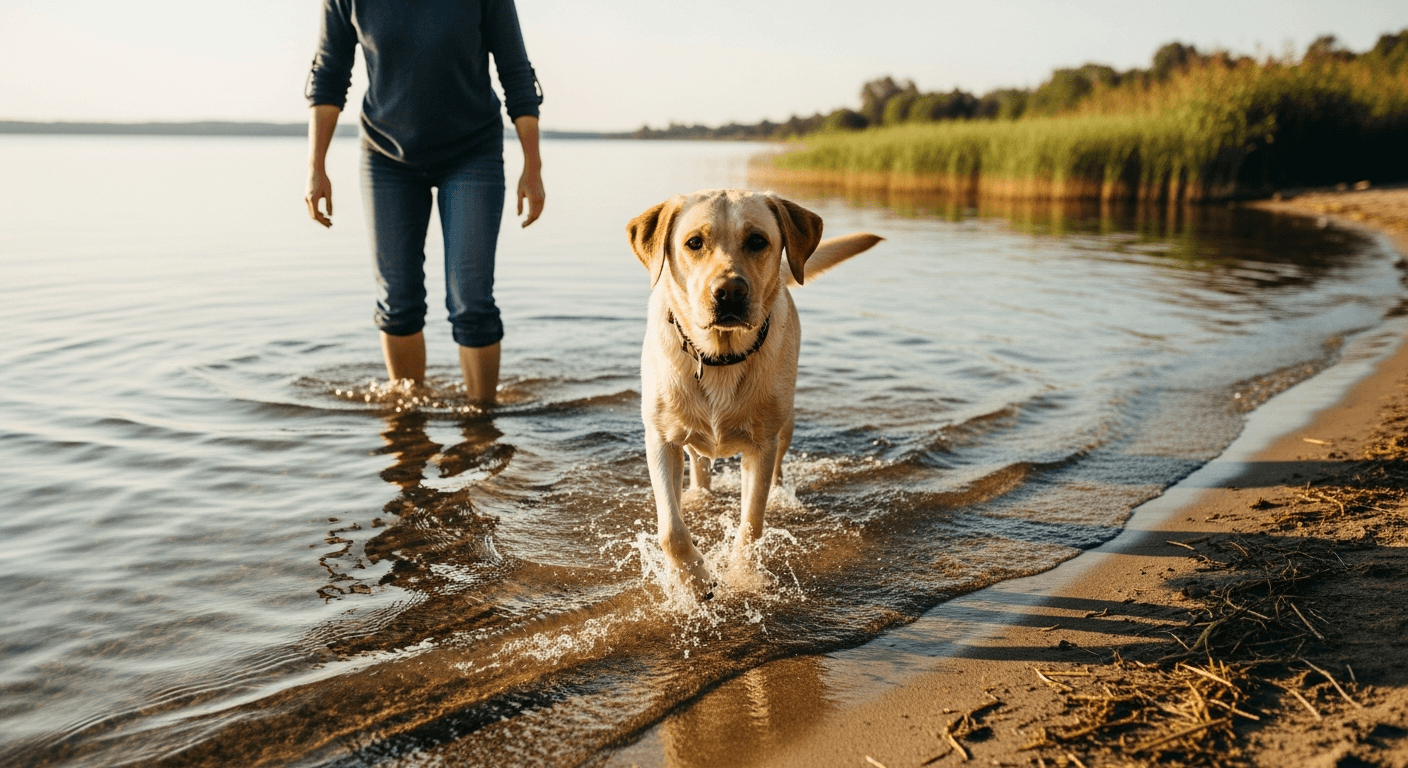
Start in still, shallow water. A calm lake shoreline, a kiddie pool, or a shallow stream works better than a backyard pool for first introductions. Still water also lets a Lab learn to use its otter tail as a rudder — directional steering comes naturally once the dog isn’t fighting current or waves at the same time.
Step 1: Let your Lab approach on its own. Stand in ankle-deep water yourself. Do not pull your Lab in. Let curiosity drive the first contact — most Labs will wade in within 2–5 minutes when the handler is calm and stationary.
Step 2: Reward every forward step. The moment your Lab enters the water, mark it with a click or a “yes” and reward with a high-value treat. Keep the first session to 5–10 minutes.
Step 3: Use a retrieve to build drive. Labs were selectively bred for centuries to retrieve from water — that instinct is still there. Once a favorite toy lands in shallow water, most Labs will wade in without hesitation, activating the same drive that sent their ancestors after birds in the North Atlantic. Gradually increase the throw distance until the retrieve requires swimming.
Step 4: Add depth gradually. Move to deeper water only after your Lab is fully comfortable wading. Some Labs make this jump on their own after step 3. Others need 2–4 sessions before they’re ready.
First swimming sessions should be no more than 10–15 minutes, even for confident Labs. Swimming uses different muscles than running, and overexertion in water is a real risk — especially if you have a young Lab eager to please.
For a full training approach to building water confidence through retrieve work, see our complete Labrador training guide →
Swimming Pool Safety for Your Lab
A backyard pool is convenient, but it comes with specific risks that natural water does not.
Teach your Lab where the steps are — before anything else. Every pool session should begin and end at the steps or ramp. Your Lab needs to know the exit point before it ever needs to use it in a hurry.
Install a dog pool ramp. A 65–80 lb adult Lab pulling itself over a pool ledge can injure its chest and front legs repeatedly over time. A dog ramp rated for 100+ lbs gives your Lab a gradual, safe exit. Several good options are available in the $50–$100 range on Chewy and Amazon.
Rinse after every swim. Chlorine strips the natural oils from a Lab’s double coat and causes skin irritation with repeated exposure. A fresh water rinse takes 60 seconds and prevents buildup. For full coat care after water activities, see our Labrador bathing guide →
Never leave your Lab unsupervised at the pool. Even strong swimming Labs can panic, miss the exit, and exhaust themselves. This is especially true for puppies, senior Labs (age 7+), and dogs with joint conditions.
Swimmer’s Tail — The Water Risk Most New Lab Owners Miss
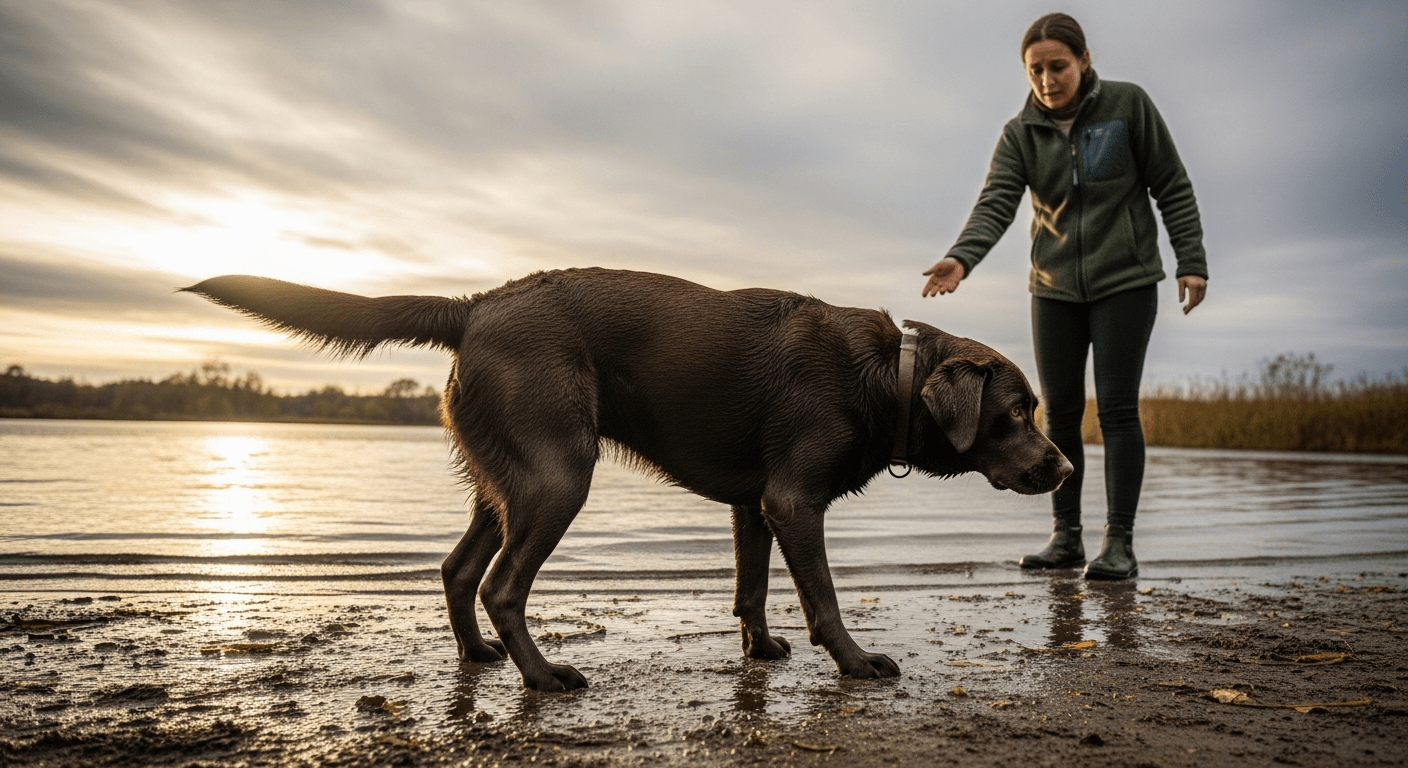
Swimmer’s tail — also called cold water tail, limber tail, or cold tail — is an acute inflammation of the muscles at the base of the tail. It causes the tail to go completely limp, hanging straight down or extending a few inches then dropping.
It is painful. Affected Labs typically show signs within a few hours of a water session: a limp tail, reluctance to sit, whimpering when the tail base is touched, and sometimes loss of appetite.
The condition is most common after:
- The first swim of the season, especially in cold water
- Extended or unusually intense swimming sessions
- Swimming in cold water without a warm-up
Swimmer’s tail is not a serious medical condition in most cases. Veterinarians typically treat it with anti-inflammatory medication and rest. According to VCA Animal Hospitals, most dogs recover fully within 3–7 days with appropriate care.
Prevention is straightforward: Limit first-of-season swims to 10–15 minutes. Avoid very cold water. Let your Lab warm up with a short walk or fetch session before an extended swim. Gradual conditioning at the start of swimming season is the most effective way to prevent it.
If your Lab’s tail stays limp beyond 48 hours, or if you notice weakness in the hind legs, call your vet. While swimmer’s tail is usually benign, persistent limping can indicate a spinal issue that needs a different diagnosis.
Swimming as Exercise for Labradors
Swimming is one of the best low-impact exercise options for Labs, especially for dogs with early-stage hip dysplasia or joint stiffness. It works the whole body with minimal stress on bones and joints.
That said, swimming alone is not enough. A Lab that swims for 20 minutes has had a solid cardio workout, but it still needs daily walking, structured training sessions, and mental enrichment throughout the day.
Labs need 45–60 minutes of vigorous exercise daily as adults, according to the AKC — and that total should be a mix of physical and mental activity, not just water time.
For a full breakdown of exercise by age and life stage, see our Labrador exercise guide →
Frequently Asked Questions
Do all Labradors like water?
Most Labs are drawn to water by instinct — the breed was developed for aquatic retrieval work in Newfoundland. But individual Labs vary. A dog with no early water exposure or a negative water experience may be hesitant. Gradual, positive introduction usually overcomes reluctance.
At what age can a Labrador puppy swim?
Most Labs are ready for supervised shallow-water introduction between 10 and 12 weeks. Before 10 weeks, puppies tire too quickly and lack the coordination to navigate depth safely. Keep first sessions short and in still, shallow water.
Do Labradors have webbed feet?
Yes. Labs have visible webbing between their toes, more pronounced than most breeds. Combined with their otter tail and water-resistant double coat, webbed feet make Labs efficient natural swimmers.
Can Labs swim in cold water?
Labs tolerate cold water better than most breeds due to their insulating undercoat. However, cold water significantly raises the risk of swimmer’s tail, and prolonged exposure can cause hypothermia in any dog. We recommend limiting cold water sessions to 10–15 minutes and watching for shivering or lethargy afterward.
What is swimmer’s tail in Labradors?
Swimmer’s tail is inflammation at the base of the tail, causing it to go limp. It typically appears within hours of a swim session, especially after cold water or overexertion. Vets treat it with anti-inflammatory medication and rest. Most Labs recover fully in 3–7 days.
Should I put a life jacket on my Lab?
For confident adult Labs in familiar, calm water, a life jacket is optional. We recommend one for: puppies in open water, Labs near boat traffic, dogs swimming in fast-moving water, and any Lab with joint conditions that limit stamina. A well-fitted flotation vest reduces fatigue and includes a top handle for quick retrieval if needed.
For a broader look at how all of this fits together, see our living with a Labrador.
Labradors like water because they were bred to work in it. For most Labs, the instinct surfaces naturally once they have positive early exposure. Introduce water gradually, supervise every swim, learn the signs of swimmer’s tail, and make sure your Lab knows where the pool exit is before it needs to find it on its own.