Are Labradors protective of their owners? Somewhat — but not in the way most people mean when they ask. A Lab will notice a stranger at your door, bark to let you know, and position itself close to you in an unfamiliar situation. What it will not do is confront an intruder, hold a property line, or deter a determined threat. Where Labs excel instead is family life — see our honest look at Labs with kids.
Most owners who search “are Labradors protective of their owners” picture one of two scenarios: a dog that alerts them to danger, or a dog that physically intervenes. The first is real. The second is not reliable.
The Labrador was bred as a retriever, not a guardian. Understanding that distinction tells you exactly what to expect — and what you’re not going to get.
What the AKC Says About Labrador Temperament
The American Kennel Club’s breed standard describes the Labrador Retriever as “friendly, outgoing, and active” with “a gentle nature with no place for aggression.” That language is deliberate. The AKC’s official Labrador breed standard lists adaptability and eagerness to please as defining traits — the opposite of the territorial drive that makes a genuine guard dog.
Labs were developed in Newfoundland for cooperative work alongside fishermen. They hauled nets, retrieved lines from cold water, and worked in close quarters with multiple handlers. The selection pressure over centuries was toward trust, sociability, and a neutral response to strangers — not suspicion of them.
That temperament is still there. A well-bred Lab that meets a stranger is likely to wag its tail, not size them up.
What Protective Actually Looks Like in a Lab
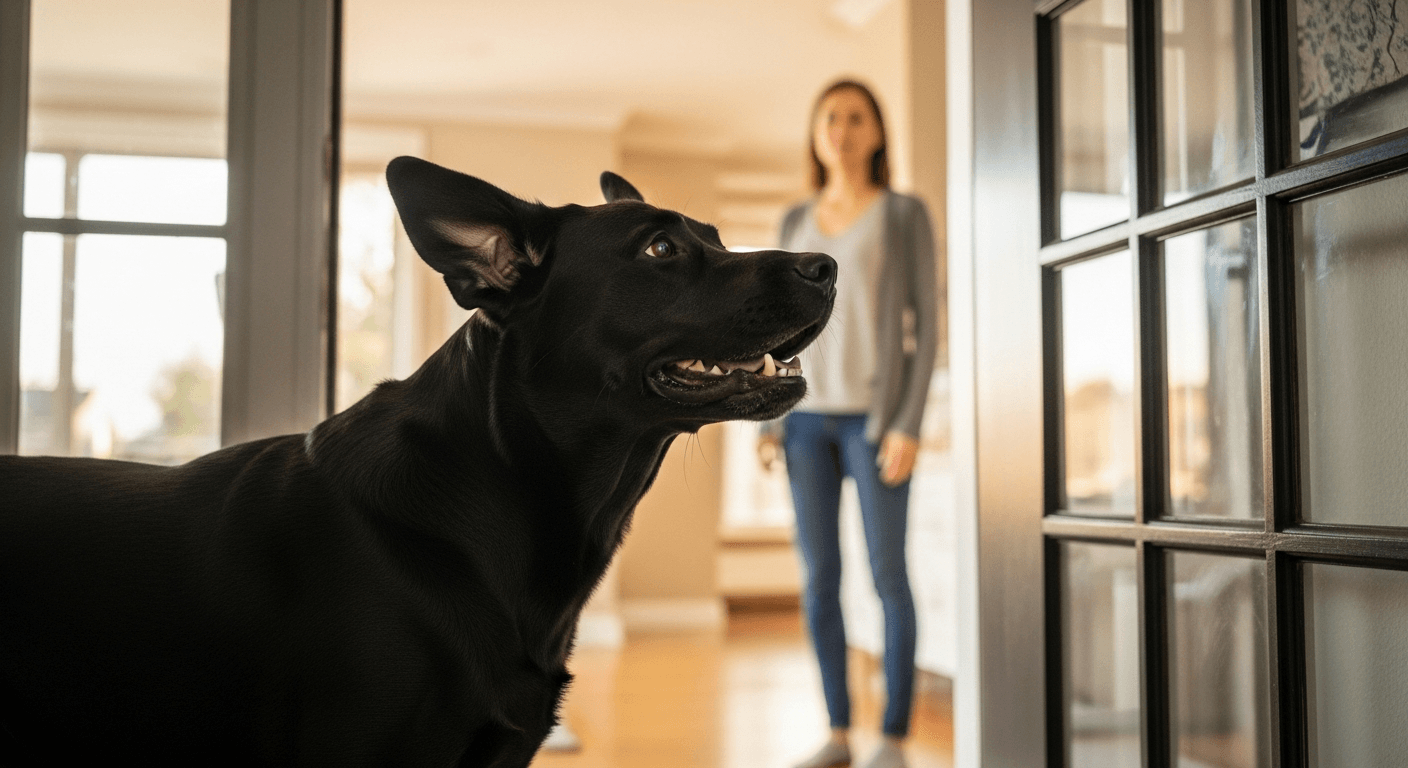
Labs do show protective behavior — it just looks different from what guard breeds do.
Alert barking. Labs hear unusual sounds and bark to announce them. A door knock, footsteps outside, or an unfamiliar car in the driveway will often trigger an immediate vocal response. The bark sounds assertive. It is the most useful thing a Lab will do for home security — it announces that something is there.
Proximity loyalty. Labs bond closely to their family and naturally position themselves near the people they’re attached to. In an unfamiliar environment or a situation where you’re visibly anxious, your Lab will often press against your leg, stay close, or put itself physically between you and whatever is causing concern. This is not trained protective behavior — it is a loyalty response that emerges from the bond.
Situational alertness. Individual Labs vary more than people expect. A Lab with a more assertive temperament may hold a hard stare at someone who approaches too fast or behaves erratically. Some Labs, particularly those with strong working lines, show noticeably more watchfulness than show-line dogs bred for softness.
None of this constitutes protection in the trained sense. But it is real, and it is present in most Labs. The distinction to keep in mind: Labs will alert you to a threat. They are not equipped to handle one.
Why Labs Aren’t Reliable Guard Dogs
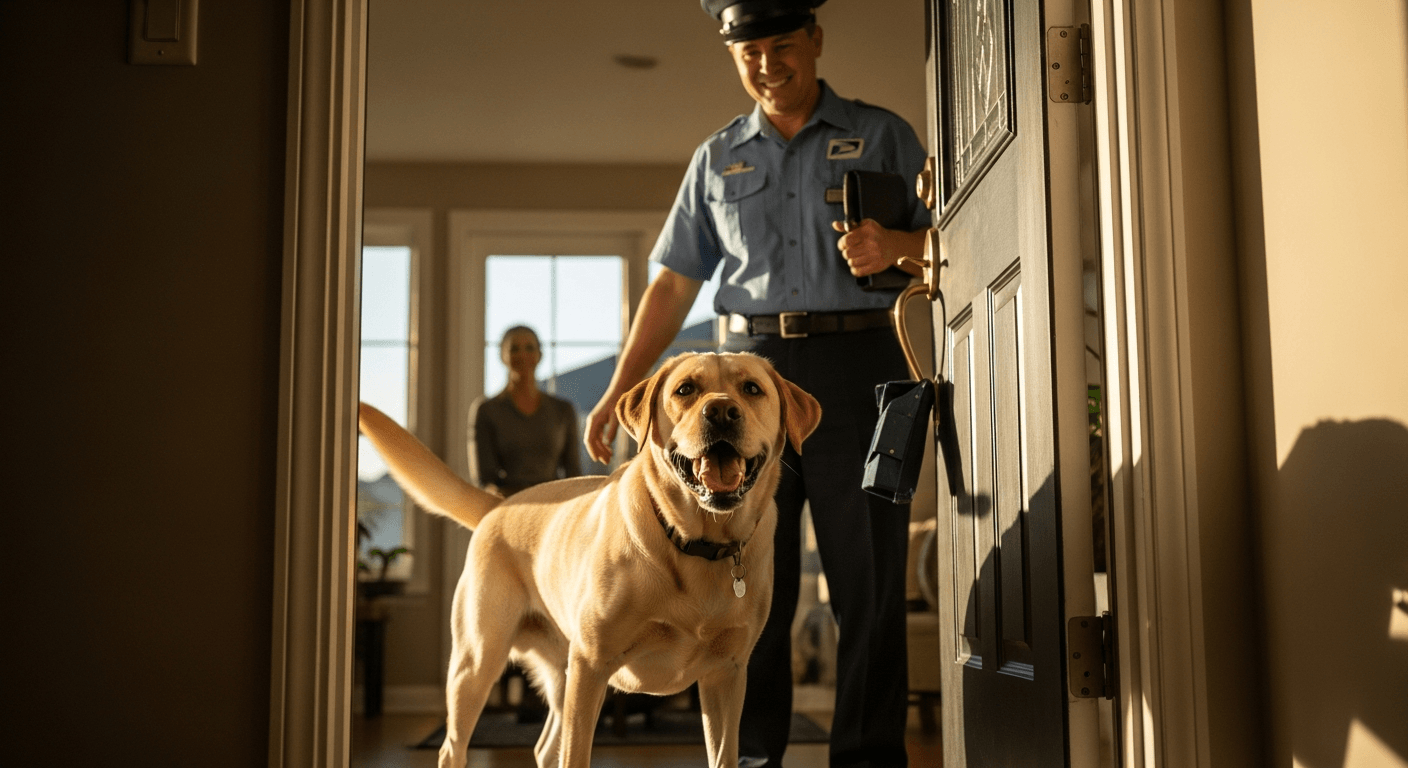
The same traits that make Labs exceptional family dogs work directly against guard dog function.
Friendliness with strangers. Most Labs greet new people with enthusiasm, not suspicion. An intruder who remains calm and non-threatening is more likely to get a wagging tail than a challenge. This is not a failure of character — it is exactly what the breed was designed to do.
No territorial drive. Guard breeds like German Shepherds, Rottweilers, and Doberman Pinschers have selective pressure toward territorial defense built into their genetics. They assess strangers as potential threats by default. Labs do the opposite — they assume positive intent unless directly challenged, and even then their response is usually noise, not action.
Bite inhibition. Labs have soft mouths — a trait developed for retrieving game without damaging it. The same bite inhibition that makes Labs gentle with children makes them poor candidates for any physical confrontation. Labs are rarely responsible for serious bite incidents. That statistic cuts both ways.
High pain tolerance, low aggression ceiling. Labs tolerate pain well but don’t escalate to aggression readily. A guard dog that gets hit or struck typically intensifies its response. A Lab is more likely to withdraw.
If your goal is a dog that will physically deter an intruder, a Lab is the wrong choice. The breeds consistently trained for that work — German Shepherds, Belgian Malinois, Rottweilers — have the temperament, drive, and aggression ceiling that protection work demands.
Labs vs. Guard Dog Breeds — A Direct Comparison
| Trait | Labrador Retriever | German Shepherd |
|---|---|---|
| Stranger response | Friendly by default | Suspicious by default |
| Territorial drive | Low | High |
| Alert barking | Yes | Yes |
| Bite potential | Low | High |
| Protection trainability | Limited | High |
| Family dog reliability | Excellent | Good with training |
| Recommended for home protection | No | Yes (with training) |
The comparison is not meant to disparage Labs. A Lab is a better fit for 90% of households than a German Shepherd. But the question “will my Lab protect me?” has a different honest answer than “will my German Shepherd protect me?”
Can You Train a Lab to Be More Protective?
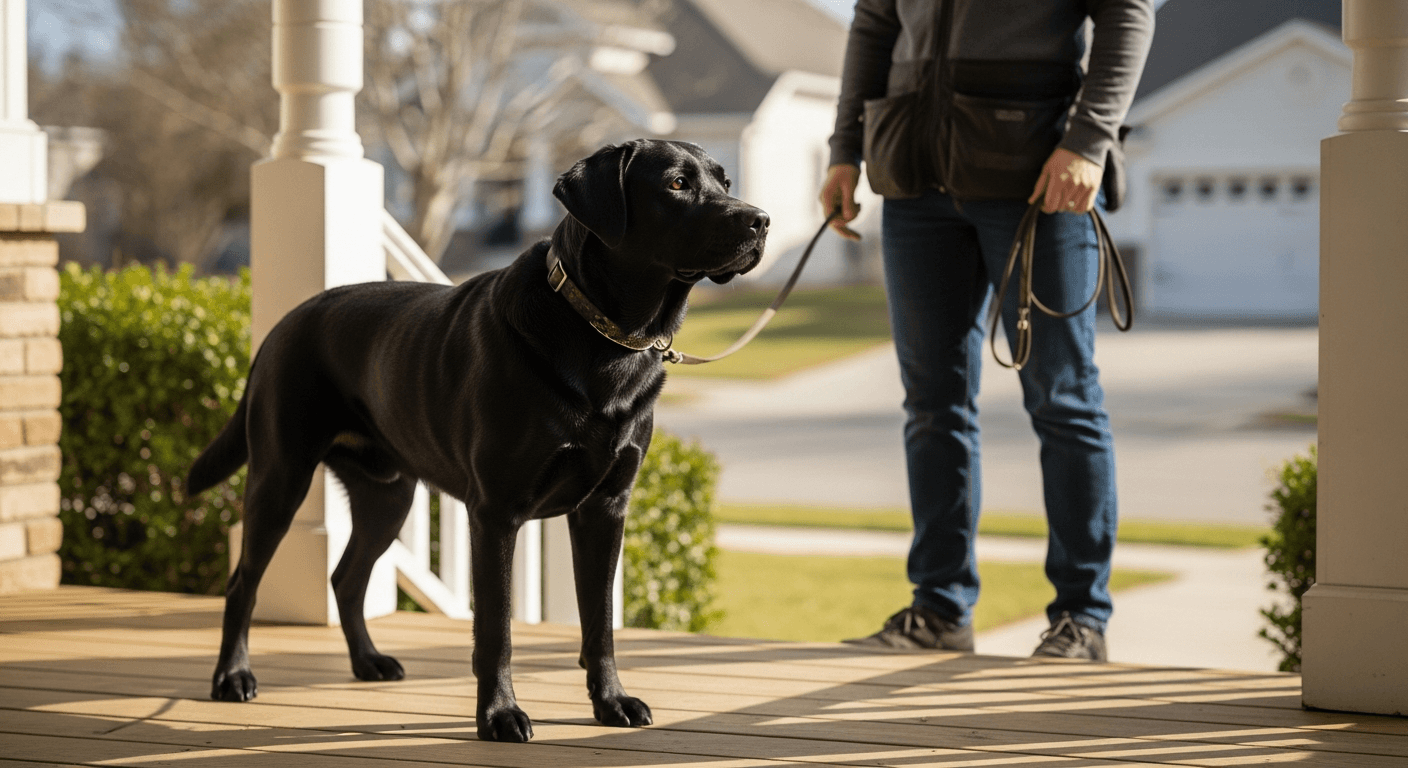
Some owners ask about protection training for their Labs. The short answer: basic protection training is possible, but you are working against the breed’s grain.
Labs can be trained to bark on command, hold a focused alert, or respond to a specific protection cue. Some sporting-line Labs with higher drive tolerate this training better than others. What you cannot train into a Lab is genuine territorial aggression or a reliable challenge response — those require a base temperament that most Labs simply do not have.
Professional protection trainers generally do not recommend Labs for personal protection work. Not because Labs are unintelligent — they’re one of the easiest breeds to train — but because protection work depends on a specific combination of drive, suspicion, and controlled aggression that the Labrador’s breeding has selected against for over a century.
What you can reinforce without formal training: alert barking. If your Lab naturally barks when someone approaches the house, do not suppress it. That bark is a real deterrent. A potential intruder who hears a dog barking inside has no idea what breed is behind the door.
For full guidance on what Labs can and can’t be trained to do, see our complete Labrador training guide →
The Real Security Value of Owning a Lab
Labs are not guard dogs. But they offer two genuine security benefits that are worth naming clearly.
An audible deterrent. Studies on residential burglary consistently find that dogs — any dogs — reduce break-in risk. Burglars avoid properties with audible dogs not because they fear the dog, but because noise attracts attention. Your Lab barking is functionally valuable even if it would greet the burglar at the door.
Family awareness. Labs notice changes in their environment. A Lab that wakes you at 3 a.m. because it heard something outside is performing a real protective function, even if its follow-up plan involves wagging its tail at whoever comes through the window.
If you want both a family dog and genuine home protection, the practical solution most owners land on is a Lab plus a visible deterrent (security camera, yard sign, motion lighting). The Lab handles the social and family role; the external systems handle the security function.
Frequently Asked Questions
Are Labradors protective of their owners?
Labs show loyalty-based protection — they stay close, alert bark, and often position themselves near family members in unfamiliar situations. They do not have the territorial drive or aggression ceiling of true guard breeds.
Will a Labrador protect me from an intruder?
Unlikely in the physical sense. Most Labs would bark at an intruder but not confront one. Their friendly disposition toward strangers means a calm intruder is unlikely to face a serious challenge.
Are black Labs more protective than yellow or chocolate Labs?
No. Coat color does not determine temperament or protective drive in Labradors. Working-line Labs — regardless of color — tend to be more alert and driven than show-line Labs, but that is a function of breeding purpose, not coat.
Can Labs be trained as protection dogs?
Labs can learn alert barking and some basic security behaviors, but they are not suited for serious protection work. Breeds like German Shepherds, Belgian Malinois, and Rottweilers are specifically bred for that function.
Do Labradors bond strongly enough to be protective?
The bond is not the limiting factor. Labs form extremely strong bonds with their family — arguably stronger than many guard breeds. The limitation is temperament and drive, not attachment.
Are Labradors good family protection dogs?
They are excellent family dogs. As protection dogs in the strict sense, they are not well-suited. The two roles use different breed traits.
Are Labradors protective of their owners in a way that matters day to day? Yes — alert barking, proximity loyalty, and environmental awareness are real and present in most Labs. The territorial aggression of a trained guard breed is not.
Labs are loyal, alert, and closely bonded to their family. Most will bark at strangers, stay near their people in tense situations, and notice changes in their environment faster than you will. That is the realistic protection you get from a Labrador — and for most households, combined with sensible home security measures, it is genuinely useful.
If you are looking for a dog that will physically confront a threat, a Lab is not that dog. If you are looking for a dog that will alert you, stay close, and be deeply bonded to the people it lives with, a Lab delivers all three.
For more on the Labrador’s temperament, daily needs, and what life with one actually looks like, see our Complete Guide to Living with a Labrador →