
When to neuter a labrador depends on whether the dog is male or female. The largest Lab-specific study suggests waiting past 6 months for males and past 1 year for females. The main reason is a lower risk of joint problems.
That study is a guide, not a deadline. Your vet, who can examine your dog, makes the final call. Below, we separate what the research measured from what individual vets prefer, so you can have a better conversation at the clinic.
Male Labs and the Six-Month Line

The main research on when to neuter a labrador is a 2020 paper by Hart and colleagues at UC Davis, published in Frontiers in Veterinary Science. It looked at 35 breeds, and the Labrador section drew on records from 1,933 dogs.
For male Labs, the paper reports that one or more joint disorders occurred in 6% of intact males. That rose to 13% in males neutered before 6 months of age. The authors called that increase significant.
The joint disorders tracked were hip dysplasia, elbow dysplasia, and cranial cruciate ligament tears. These are the big three orthopedic problems in large, active breeds.
From that, the paper suggests neutering male Labs beyond 6 months of age. On when to neuter a labrador male, that is the whole guideline: after 6 months, not a specific birthday.
The American Animal Hospital Association (AAHA) goes further for big dogs. Its 2019 Canine Life Stage Guidelines advise neutering males expected to top 45 pounds after growth stops, usually between 9 and 15 months. Our guide to when Labs stop growing explains that timeline. AAHA’s advice covers all large breeds, so it is broader than the Lab-only study.
So for a male, the practical answer to when to neuter a labrador is this. Avoid neutering before 6 months if you can. After that, most vets aim for the 9-to-15-month window, once growth slows, and fit it to your dog’s growth, behavior, and home.
Female Labs and the First Year
Female Labs showed a different pattern in the same paper. Joint disorders occurred in 6% of intact females. In females spayed before 6 months, or between 6 and 11 months, the rate rose to about 11–12% for each period.
That is why the study’s guideline for females is later. On when to neuter a labrador female, it suggests delaying spaying until beyond 1 year of age.
The female question also involves heat cycles. A female Lab usually has her first heat somewhere between 6 and 15 months. Waiting past a year likely means managing at least one heat.
The AVMA notes something many owners assume the other way. According to its owner guidance, there is no known benefit to waiting until after a female’s first heat before spaying. Waiting past a year in a Lab is about joints, not about letting her “have a season.”
So, when to neuter a labrador that is female? The study points to after her first birthday. AAHA gives large-breed females a wider window, 5 to 15 months, and leaves the exact timing to your vet. Your vet may suggest a specific window between heats, since surgery is often scheduled away from an active cycle.
Deciding when to neuter a labrador female also means planning for heat. That is covered in the next sections.
Joints and Cruciate Risk

Joint disease is the main reason Lab owners are advised to wait. It is also the main reason the answer to when to neuter a labrador is different from the answer for a small breed.
In the Hart study, the joint disorders were grouped together. That group included cranial cruciate ligament (CCL) tears, which are a common knee injury in Labs. The paper did not claim neutering causes a tear. It found an association: dogs neutered early had more joint problems in the records.
Why might timing matter? Sex hormones help signal the growth plates in the long bones to close. Removing them early may let bones grow a little longer, which can change joint angles and stress.
That is the common explanation. It is a theory, not a proven cause.
Limits matter, and we want to name them:
- The data came from one university veterinary hospital’s records.
- Hospital patients may not match the average pet Lab.
- The study shows associations, not proof of cause.
- It does not account for every factor, such as diet, weight, and exercise.
Body weight is a factor you control, whatever you decide about when to neuter a labrador. Extra pounds strain growing joints, and spayed or neutered dogs are more prone to weight gain, according to the AVMA. Keep your Lab lean before and after surgery. Our guide to feeding a Labrador can help you adjust portions.
If joint disease is already in your dog’s family, bring that up with your vet. Our Labrador hip dysplasia guide covers signs, screening, and treatment.
What Waiting Changes for Heat, Pregnancy, and Marking
Waiting is not free. Once you decide when to neuter a labrador, you also accept what comes with an intact dog until then.
For females, waiting usually means at least one heat cycle. A heat lasts about two to three weeks. It brings bloody discharge, swelling, and strong interest from male dogs.
You will need to keep her leashed outside, supervise her closely in the yard, and keep her away from intact males. An accidental litter is a real risk.
For males, a later answer to when to neuter a labrador can mean more marking, roaming, and interest in females in heat. The AVMA notes neutering generally reduces roaming and urine marking. Not every intact male does these things, and neutering does not guarantee they stop.
Daycare and boarding rules are a practical factor. Many daycares require dogs to be spayed or neutered by 6 or 7 months.
That is a logistics issue, not a medical one. It is still a real reason families feel pressure. Ask if your daycare accepts a vet’s note, or look for one that welcomes intact dogs under a set age.
Some owners ask about options that keep hormones. The AVMA lists hysterectomy for females and vasectomy for males. These prevent pregnancy but leave the ovaries or testicles in place, so heat cycles and hormone-driven behavior continue. Few vets perform them routinely, so ask ahead.
When Earlier Is the Medical Call
The study’s guideline on when to neuter a labrador is a starting point for a healthy dog. Some situations call for surgery sooner, and your vet may recommend it.
Retained testicles are one case where when to neuter a labrador is no longer a timing debate. A cryptorchid dog has one or both testicles that never dropped into the scrotum. VCA Animal Hospitals explains that retained testicles carry a higher risk of cancer and are usually removed. Your vet will advise on timing.
Pyometra is the key reason some vets do not want to wait forever on females. It is a serious infection of the uterus in intact females, and it can be life-threatening.
In the Hart study, 2% of intact female Labs had pyometra. The risk grows with age, and spaying removes it. Signs often appear weeks after a heat: lethargy, drinking more, vaginal discharge, or a swollen belly. Any of these in an intact female means a same-day vet call.
Mammary cancer is the other female factor in when to neuter a labrador. In the Hart study, it occurred in 1% of intact females and 2% of those spayed between 2 and 8 years. The AVMA notes that spaying reduces the risk of breast cancer in general.
The cancers the study tracked beyond those, lymphoma, hemangiosarcoma, mast cell tumors, and bone cancer, did not show a clear rise with neutering at any age in Labs. That is a Lab-specific result. The paper found a different pattern in Golden Retrievers, which is why breed matters.
Urinary incontinence was low in spayed female Labs, about 2–3% in those spayed at various ages through 1 year.
We will not pick a winner between these tradeoffs for you, because when to neuter a labrador is a judgment about one dog. Joints argue for waiting. Pyometra, pregnancy risk, and mammary tumors argue against waiting forever. Your vet can weigh them for your dog.
How to Talk to Your Vet
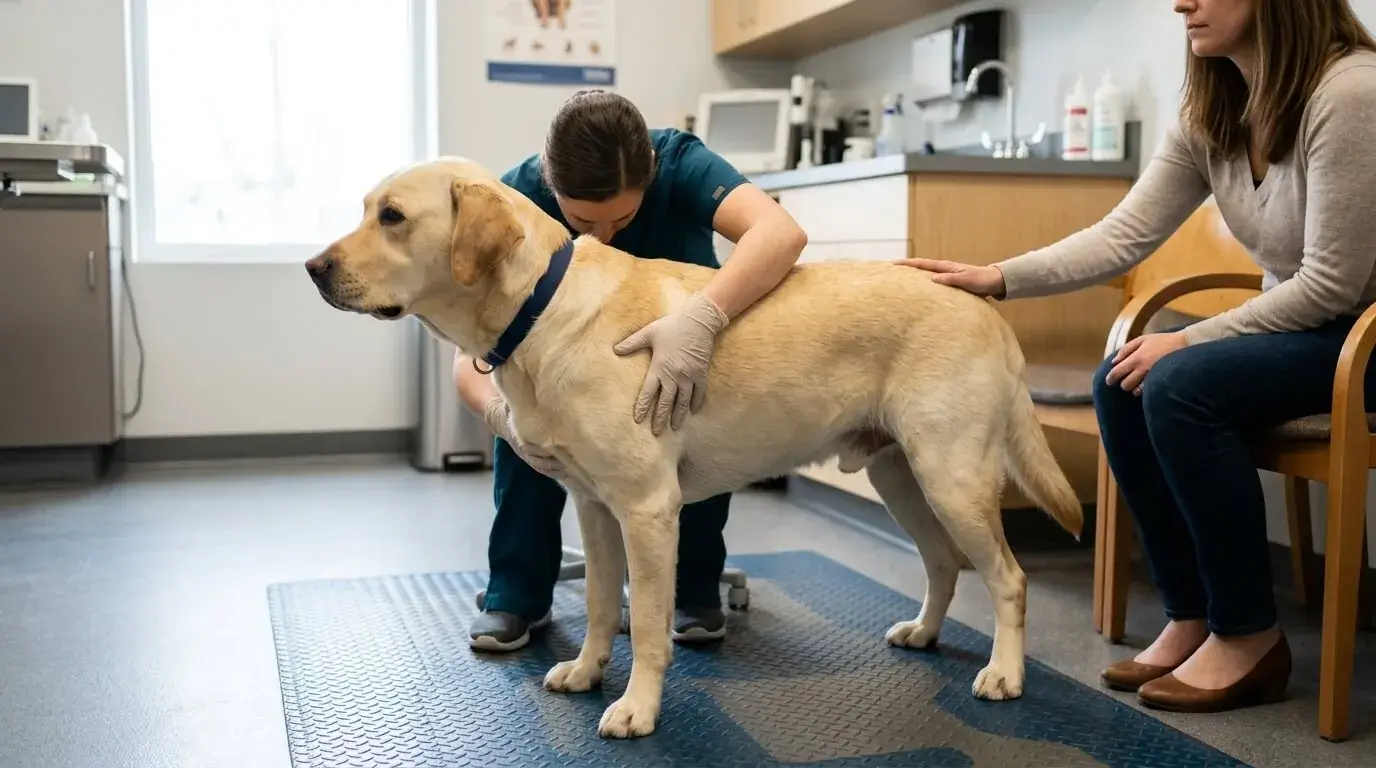
The best answer to when to neuter a labrador comes from a vet who knows your dog. The AVMA says there is no one-size-fits-all timing for dogs. It lists breed, age, sex, personality, role, home environment, and health as factors.
Bring questions, not a fixed date:
- Given my Lab’s sex and growth, what age do you recommend, and why?
- Have you read the 2020 Hart study on Labrador neutering?
- Are there risks in my dog’s family history that change the timing?
- For a female, when during her cycle would you schedule surgery?
- For a male, is there any sign of a retained testicle?
- What should I feed after surgery to prevent weight gain?
- Do you offer ovary-sparing or vasectomy options?
Good vets welcome questions about when to neuter a labrador. If a clinic insists on 6 months for every dog without discussion, it is fair to ask for their reasoning.
Recovery is short but real. Expect 10 to 14 days of leash-only walks, no running or jumping, and a cone or recovery suit to protect the incision. Check the incision daily for swelling, discharge, or opening, and call the clinic if you see any.
Keep your Lab fit and lean either way. Weight control helps joints at any age. For a broader picture of health checks by age, see our Labrador health guide.
FAQ
What age should you neuter a male Labrador?
On when to neuter a labrador male, the Hart 2020 study suggests after 6 months, based on higher joint disorder rates in males neutered earlier. AAHA advises large-breed males wait until growth stops, usually 9 to 15 months. Ask your vet about your dog’s growth.
What age should you spay a female Labrador?
The same study suggests after 1 year, since joint disorders rose in females spayed through 11 months. Your vet may time surgery between heat cycles.
Does neutering calm a Labrador down?
Not reliably, and it should not drive when to neuter a labrador. Neutering can reduce roaming, marking, and some mating-related behaviors, according to the AVMA. It does not replace exercise and training. A young Lab is energetic because it is young.
Is early neutering bad for Lab hips?
The research links early neutering in Labs with more joint disorders, including hip dysplasia. It is an association, not proof of cause. Keeping your Lab lean also protects its hips.
Deciding when to neuter a labrador is a real tradeoff. The research favors waiting past 6 months for males and past a year for females. Your vet brings in the rest: your dog’s health, family history, and home. Use the study as your starting point, and let the vet make the final call.