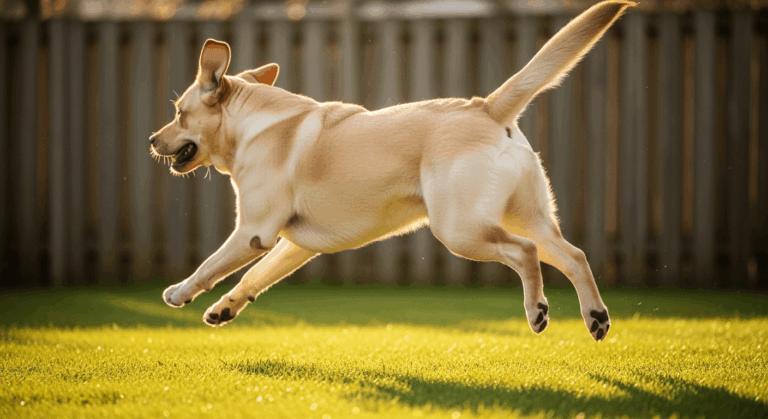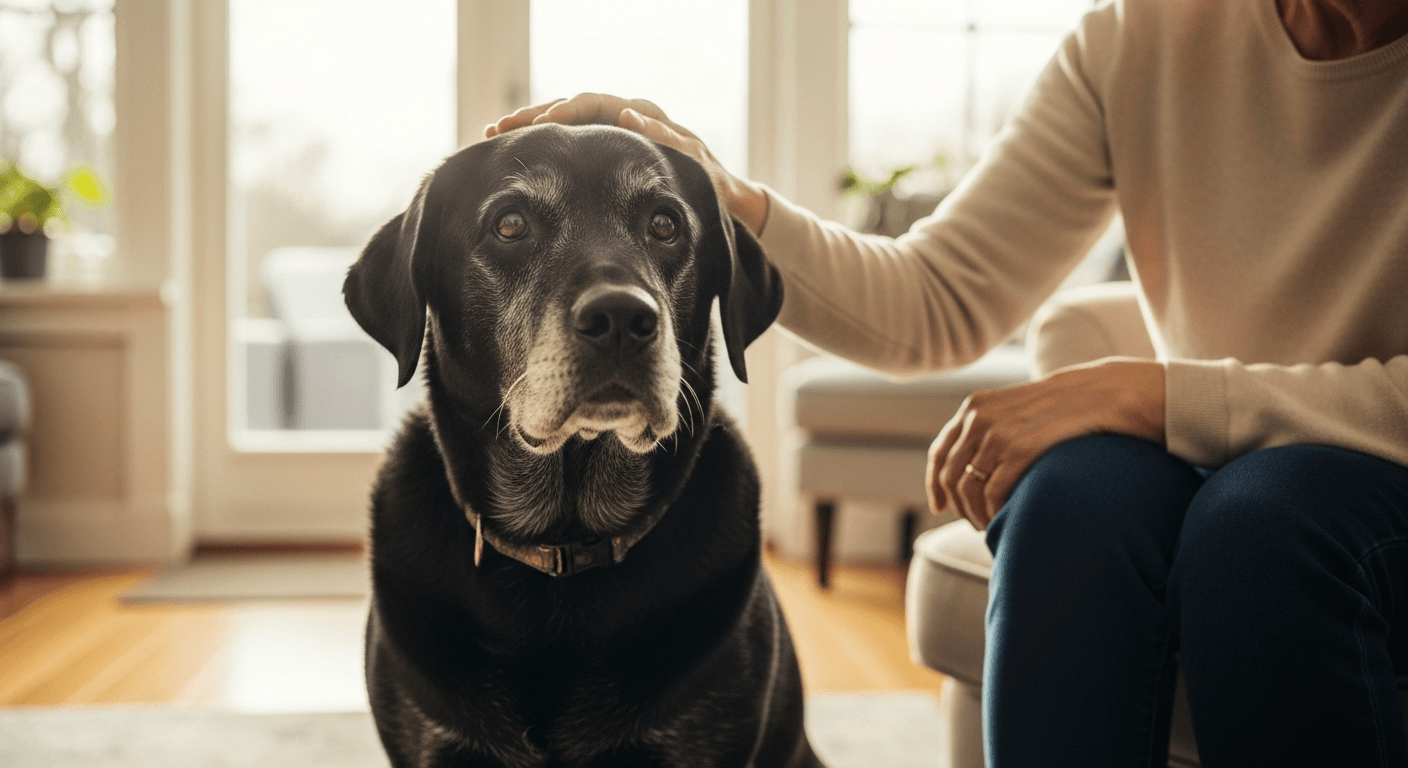
Senior Labrador care looks different from adult Lab ownership — and that shift starts around age 7. Large breeds age faster than small ones: a 7-year Labrador has used roughly 60% of its expected lifespan, based on a median of approximately 12.1 years for black and yellow Labs.
The grey muzzle appears. The stairs take longer. The morning stiffness that used to clear in five minutes now lingers. This guide covers what is changing physiologically after 7, how to adjust nutrition and exercise, and what the evidence actually shows for supplements.

When Does Senior Labrador Care Begin? Age & Physiology
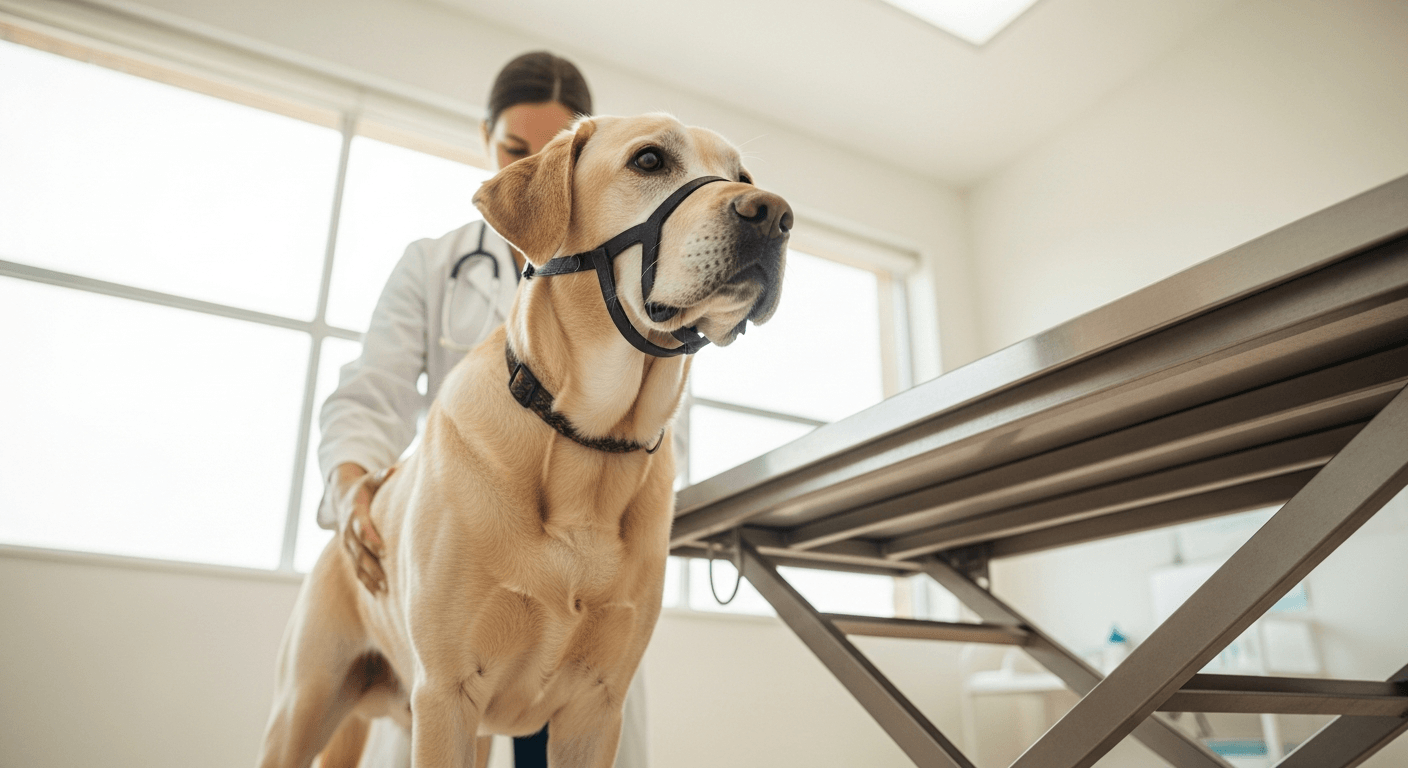
Senior Labrador care adjustments should begin at around 7 years. “Senior” is a management category, not a health verdict — a well-maintained 8-year Lab can have the energy and mobility of a younger dog. The label matters because it signals when to start adjusting veterinary monitoring, nutrition, and exercise before problems compound.
Three physiological changes are especially significant for Labradors specifically:
- Metabolic slowdown and weight gain. Labs carry a POMC gene variant that blunts satiety signaling — they are already prone to overeating at any age. A slowing metabolism in a senior Lab amplifies this predisposition significantly.
- Sarcopenia (muscle loss). Labs carry a naturally higher muscle mass baseline from their working heritage — which means early decline can be subtle and easy to miss visually. Maintained protein intake and continued exercise are the primary tools for slowing it.
- Joint wear and cognitive changes. Cartilage degeneration accumulates across a lifetime of activity. Cognitive function may begin to shift in some dogs after age 10.
Individual variation is significant. Annual wellness checks from age 7 — ideally twice-yearly from age 8–9 — are the best tool for catching these changes before they become management problems.
Senior Labrador Health Issues: What to Watch For
Osteoarthritis is the most common condition in senior Labs. Signs include stiffness after rest, reluctance to jump or climb stairs, weight-shifting between legs, and licking at joints. Arthritis is manageable but not reversible — veterinary guidance consistently supports early intervention as the most effective way to slow progression and preserve mobility.
Hypothyroidism is common in middle-aged and senior Labs — Labrador Retrievers are among the breeds with documented higher predisposition. The thyroid underproduces hormone, and the signs are easy to miss: gradual weight gain despite no dietary change, low energy, a dry or dull coat, and intolerance to cold. A blood panel confirms the diagnosis. Daily levothyroxine is inexpensive and typically effective.
Canine cognitive dysfunction syndrome (CDS) is the canine equivalent of dementia. It typically presents after age 10. Signs include disorientation, getting stuck in corners, night waking with vocalization, and loss of house-training. CDS cannot be reversed, but it can be slowed with SAMe supplementation (dosing should be confirmed with a vet — typically around 18 mg/kg daily based on published canine CDS trials) and consistent mental enrichment. Labs’ strong working drive makes enrichment-based management especially well-suited to the breed — scent work and structured activity engage the same neural pathways that slow cognitive decline. More on specific supplements below.
Cancer is the leading cause of death in Labs over 10, according to breed health surveys including data from the Morris Animal Foundation. The most common types are mast cell tumors, osteosarcoma, and hemangiosarcoma. For mast cell tumors detected at grade I or II, surgical removal carries a high cure rate — often above 90% with complete excision — compared to significantly poorer outcomes at late-stage detection. Monthly at-home examinations combined with twice-yearly veterinary checks remain the best early detection strategy.
From age 7–8, request a senior blood panel at annual vet visits. This covers thyroid function, kidney values, liver enzymes, and a full blood count. Many conditions — including hypothyroidism and early kidney disease — are detectable on bloodwork long before clinical signs appear. For joint issues specifically, see our Labrador Hip Dysplasia guide.
Best Food for a Senior Labrador: Nutrition That Supports Aging
The nutritional core of senior Labrador care is not a dramatic overhaul — a typical reduction of around 20–25% in daily caloric intake compared to adult maintenance, maintained or increased protein, and added joint support. Adjust for body condition score rather than applying a fixed percentage to every dog.
The outdated advice to reduce protein for senior dogs is not evidence-based. Protein supports lean muscle mass, which Labs lose with age. Reducing it accelerates that loss. A senior Lab needs at least as much quality protein as an adult, and in some cases more.
Senior-specific formulas vary significantly in quality. The best reduce caloric density, maintain high-quality protein sources, and add EPA and DHA (omega-3 fatty acids) for joint health. Three foods that consistently meet this brief:
- Royal Canin Labrador Retriever Adult 12+ — breed-specific formula with controlled calorie density and EPA/DHA for joint health.
- Purina Pro Plan Bright Mind Adult 7+ (Chicken & Rice) — includes medium-chain triglycerides (MCTs) shown in research to support cognitive function markers in dogs. Relevant for Labs at CDS risk.
- Hill’s Science Diet Adult 7+ — solid nutritional profile with wide availability.
Weight management is non-negotiable. Obesity accelerates joint deterioration, strains cardiovascular function, and reduces lifespan. Adjust portions to maintain a body condition score where ribs are palpable with light pressure but not visible. For full portion guidance by life stage, see our Labrador feeding guide.
Supplements for Senior Labradors: What the Evidence Supports
Glucosamine and chondroitin appear to reduce joint discomfort, particularly as a preventive measure before severe degeneration occurs. Allow 6–8 weeks of consistent use before assessing effectiveness. Cosequin DS and Nutramax Dasuquin are the two most consistently recommended veterinary brands. Dasuquin adds avocado/soybean unsaponifiables (ASU), which some evidence suggests improves outcomes over glucosamine and chondroitin alone.
Fish oil (omega-3 EPA and DHA) has stronger evidence than most supplements. Omega-3 fatty acids reduce systemic inflammation, which benefits joints, coat, and cardiovascular health. For a 30 kg Labrador, approximately 2,000–3,000 mg of combined EPA and DHA daily is commonly cited in veterinary literature — confirm the specific dose with a vet. Nordic Naturals Omega-3 Pet is a widely recommended product with transparent third-party testing.
MCT oil (medium-chain triglycerides) has emerging evidence for cognitive support in senior dogs. SAMe and silybin (combined in Denamarin) support liver health — relevant for senior Labs on long-term NSAIDs for arthritis, where prolonged use requires liver monitoring.
Avoid high-dose vitamin supplements without veterinary direction and treat generic “senior multi” products with skepticism unless the formulation is backed by published evidence. More is not better with fat-soluble vitamins.
Exercise for Senior Labradors: Keeping Active Without Causing Pain
Continued movement is essential in senior Labrador care. A sedentary lifestyle accelerates muscle loss, worsens joint stiffness, and contributes to weight gain — all of which compound each other. The goal is not less exercise but adjusted exercise: lower impact, appropriate duration, and better recovery monitoring.
Reduce or eliminate high-impact activities: ball throwing, jumping, fetch on hard surfaces, and repetitive stair use all place significant stress on joints that already have reduced cartilage.
Maintain and expand lower-impact alternatives. Leash walking on grass or packed earth keeps joints moving without jarring impact. Swimming is the single best exercise option for arthritic Labs — zero joint impact, full-body muscular engagement, and most Labs remain enthusiastic about water well into old age. Scent work and short training sessions provide mental stimulation alongside low-intensity physical activity.
Structure exercise as multiple shorter sessions rather than one long outing. Two or three 15–20 minute walks each day are easier on senior joints than a single 45-minute walk. Use the morning stiffness test as a feedback tool: if a Lab is stiff for more than 20 minutes after waking, the previous day’s activity level was too high.
An orthopedic dog bed, a car ramp, and a cooling mat for post-exercise rest reduce daily joint stress — all available through Chewy in sizes appropriate for Labs.
Quality of Life & End-of-Life Considerations
Assessing quality of life requires a consistent framework. The core questions: Is the Lab having more good days than bad? Is eating, drinking, and maintaining weight continuing normally? Does the Lab show interest in social interaction and familiar activities? Is pain being adequately controlled?
Pain management in Labs is frequently inadequate. Labs are stoic and suppress behavioral signs of pain in ways smaller breeds often do not. A Lab experiencing significant chronic pain may not limp or cry — instead they slow down, become less engaged, shift weight, or stop initiating play. If a Lab on NSAIDs still shows these signs, the current management plan needs revision. Options beyond standard NSAIDs include gabapentin for neuropathic pain, formal physiotherapy, and acupuncture — all with evidence for benefit in canine chronic pain.
Palliative care centers on maximizing comfort: soft orthopedic bedding, water and food accessible without navigating stairs, and consistent human social contact. Maintained routine supports stable function; isolation and inactivity compound decline.
The question of euthanasia is the hardest in dog ownership. The appropriate time to discuss it with a veterinarian is when a Lab is consistently having more bad days than good, when pain cannot be adequately managed, or when interest in previously meaningful activities — food, walks, human contact — has largely disappeared. Initiating that conversation early, while a Lab is still comfortable, allows a planned and peaceful process rather than a crisis decision.
Senior Labrador care is not a countdown — it is a shift in management. Adjusted nutrition, low-impact exercise, appropriate supplements, and regular veterinary monitoring give most Labs several comfortable, active years after 7. For the full picture on health conditions at every life stage, see our Common Health Problems in Labradors. For clinical reference, the Merck Veterinary Manual and VCA Animal Hospitals cover canine aging and senior disease management in depth.
Frequently Asked Questions
When does senior Labrador care become necessary?
Senior Labrador care adjustments — twice-yearly vet checks, senior diet, and reduced-impact exercise — should begin at around 7 years of age. Large breeds age faster than small ones, and proactive management from this point prevents conditions from progressing before symptoms appear.
What should I feed a senior Labrador?
A senior-specific formula with reduced caloric density and added joint support (EPA/DHA) is appropriate. Maintain or increase protein levels — the old advice to reduce protein in senior dogs is not evidence-based. Royal Canin Labrador Adult 12+ and Purina Pro Plan Bright Mind Adult 7+ are well-regarded options with strong nutritional profiles.
What supplements help senior Labradors?
Glucosamine and chondroitin support joint health — allow 6–8 weeks to assess effect. Fish oil with EPA and DHA reduces systemic inflammation and benefits joints and coat. For dogs showing cognitive changes, MCT oil or a diet containing MCTs may help. Use Denamarin for liver support if long-term NSAIDs are part of the management plan.
How much exercise does a senior Labrador need?
Senior Labs benefit from continued regular exercise — sedentary lifestyles accelerate muscle loss and joint stiffness. Adjust the type (lower impact: walking and swimming over fetch and jumping) and the structure (two to three shorter sessions rather than one long walk). Morning stiffness lasting more than 20 minutes is a sign the previous day’s activity level was too high.
How do I know when my senior Lab is in pain?
Labs are stoic and often do not limp or vocalize pain. Watch instead for behavioral changes: reluctance to rise, reduced interest in walks, stiffness after rest, weight-shifting between legs, or licking at joints. Undertreated chronic pain is common in senior Labs — discuss a comprehensive pain management plan with a vet if any of these signs appear consistently.